
Purdue University
Nov 11, 2026Episodes (658)

Gary McGraw, No Security Meter for AI
Nov 11, 202656m#929Video
Let's say you wanted to make sure that your AI is secure. Can you just maximize the security and privacy benchmark and call it a day? Nope, because benchmarks don't actually work for measuring AI capabilities (even when

Melissa Dark, The Nature of Cybersecurity Knowledge
Nov 4, 202649m#928Video
Melissa Dark has worked in cybersecurity education for 26 years. Her work spans practical projects that grow cybersecurity education opportunities, build capacity in educational institutions, and strengthen robust cybers

Brad Sollar, Trust Without a Connection: Layered Security for Disconnected Mission Compute
Oct 28, 202659m#927Video
Military, intelligence and critical infrastructure systems increasingly run AI and mission workloads at the edge. That means contested, disconnected, and physically exposed environments where the usual cloud security ass

JohnGabriel Nguyen-Truong, The Way We Travel the World Is at Risk: GPS Origins, Recent Disruptions, and Alternative Paths to Resilient Positioning
Oct 21, 202648m#926Video
GPS was formally approved as a U.S. Department of Defense program in December 1973 and developed as a military system for precise three-dimensional positioning, navigation, and timing—driven in large part by requirements

Sandhya Aneja, From Data to Decisions: AI-Powered Optimization in Modern Communication Networks
Oct 14, 202653m#925Video
Modern communication networks face growing challenges in performance, security, and resilience as superintelligence,the Internet of Things, and high-performance computing continue to evolve. This talk explores how AI-dri
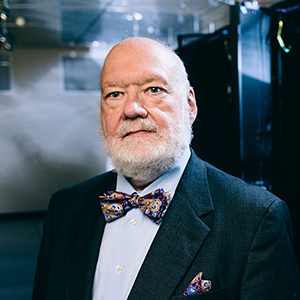
Eugene Spafford, AI: Cybersecurity Panacea or Existential Threat?
Oct 7, 20261h 5m#924Video
Twenty years ago, the first post on the CERIAS blog took apart the rule that passwords must be changed every month. NIST retired the practice in 2017; some standards still require it. That is how a security myth works: a

Krassimir Tzvetanov, Trading Privacy for Convenience: Leading through example in a Hyper-Connected Era
Sep 30, 202648m#923Video
In contemporary digital environments, individuals increasingly exchange personal privacy for the convenience afforded by online services, often without full awareness of the breadth or implications of this trade-off. Thi

Jingjie Li, Advancing Online Safety Governance for Digital Platforms and Communities
Sep 23, 20261h 7m#922Video
Internet users increasingly interact through emerging digital platforms and communities, which create complex online safety, security and privacy challenges that aredifficult to navigate. This talk will present insights

Mahimna Kelkar, Rethinking Cryptography and Blockchain Attacker Models
Sep 16, 202650m#921Video
In the past few years, blockchains have emerged as a new class of decentralized systems with wide-ranging applications. But the promise of blockchains has been marred by hype, speculation, and a plethora of high-profile

Romila Pradhan, Reasoning About Interventions in Data and Machine Learning Systems
Sep 9, 202654m#920Video
Modern machine learning systems are only as reliable as the data and pipelines that support them, yet improving their behavior often requires navigating enormous spaces of possible data and system configurations. These s

Armin Moin, TianoShield: Improving the Security Posture of the TianoCore Ecosystem
Sep 2, 202644m#919Video
In this talk, I will provide an overview of our NSF-sponsored award, TianoShield, focused on enhancing the security posture and the software maintenance process of the open-source core of the UEFI Firmware, called EDK II

Matt Scheurer, Lies, Telephony, and Hacking History
Aug 26, 202659m#918Video
You may find yourself attending a CERIAS Security Seminar, and you may ask yourself "Well, how did we get here?" Once upon a time, not long ago, there was no cybersecurity industry or careers. This talk transports attend

Pragathi Jha, Modeling Cyber Adversaries: A Critical Survey of Methods and Assumptions
Apr 29, 202649m#917Video
Cybersecurity practitioners face a persistent methodological problem: how should we reason about intelligent adversaries who observe our defenses, adapt their tactics, and choose targets based on our vulnerabilities? The

Smriti Bhatt, Evolving Security Landscape in the Agentic AI-Enabled IoT Era
Apr 22, 202659m#916Video
The rapid evolution of connected devices and technologies has transformed the Internet of Things (IoT) into increasingly intelligent and autonomous systems. This talk focuses on the progression from traditional IoT to th

Gary Hayslip, The AI Arms Race
Apr 15, 202652m#915Video
Ransomware has evolved from basic digital extortion into a sophisticated, AI-powered threat that's faster,smarter, and more devastating than ever before. In this session, we'll explore how threat actors are weaponizing a

Brian Peretti, Symposium Closing Keynote: AI, Cybersecurity, and the Path Forward
Apr 8, 20261h 13m#914Video
Annual Security Symposium. Visit: https://ceri.as/2026 Artificial intelligence is rapidly transforming both the opportunities and risks within cybersecurity, creating a new landscape that today's students and researchers

Jen Sims, Analyzing Supply Chain Risk in Mobile Applications for Home Energy Storage Systems
Apr 1, 202655m#913Video
The rapid adoption of mobile applications for managing consumer whole-house battery and energy systems has introduced new questions about software supply chain security. While these applications are not currently integra

Kelechi Kalu, Software Signing in Practice: Lessons from Adoption and Usability Toward Broader Supply Chain Trust
Mar 25, 20261h 3m#912Video
Software signing is a foundational mechanism for improving software supply-chain security because it helps establish artifact provenance, integrity, and authenticity across organizational boundaries. Yet the security val

Ashish Kundu, Quantum Secure Networks
Mar 11, 20261h 1m#911Video
Quantum threats to cryptography has been fueled by Shor's and Grover's quantum algorithms and their derivatives. That has led a decade-long development of post-quantum cryptography algorithms and standards. While there a

Ruqi Zhang, Discovering and Controlling AI Safety Risks in Foundation Models: A Probabilistic Perspective
Mar 4, 202659m#910Video
As foundation models, including large language models and multimodal models, are increasingly deployed in complex and high-stakes settings, ensuring their safety has become more important than ever. In this talk, I prese

Danny Vukobratovich, ISO 27001 as the Engine, NIST CSF 2.0 as the Dashboard, A Practical Operating Model
Feb 25, 20261h 3m#909Video
Many organizations adopt security frameworks but struggle to turn them into day-to-day operations that reduce risk without slowing delivery. This talk presents a practical operating model that pairs ISO/IEC 27001 (as the

Thai Le, Towards Robust and Trustworthy AI Speech Models: What You Read Isn't What You Hear
Feb 18, 202638m#908Video
Deepfake voice technology is rapidly advancing, but how well do current detection systems handle differences in language and writing style? Most existing work focuses on robustness to acoustic variations such as backgrou

Bethanie Williams, AI-Assisted Cyber-Physical Attack Detection in Smart Manufacturing Systems
Feb 11, 202647m#907Video
The rise of Industry 4.0 has transformed manufacturing through the integration of cyber-physical systems, connectivity, and real-time data exchange into increasingly automated and intelligent platforms. While these advan

Mary Jean Amon, Parental Sharing ("Sharenting") Through the Lens of Interdependent Privacy
Feb 4, 202646m#906Video
Parental sharing, sometimes termed "sharenting," refers to ways that parents share information about their children online and is a common mechanism through which young children are exposed to social media. Parental shar

Young Kim, Counterfeit Medical Devices and Medicines as a Fundamental Cyber-Physical Security Problem
Jan 28, 202653m#905Video
Hardware security is not a new problem, but it is rapidly expanding in both consumer and medical domains due to hyperconnectivity. Medical devices and counterfeit medicines represent a fundamental security challenge. In